Author

Enzo Health Team
Enzo Health
Details
Read Time: 10 min read
Date: June 12, 2026
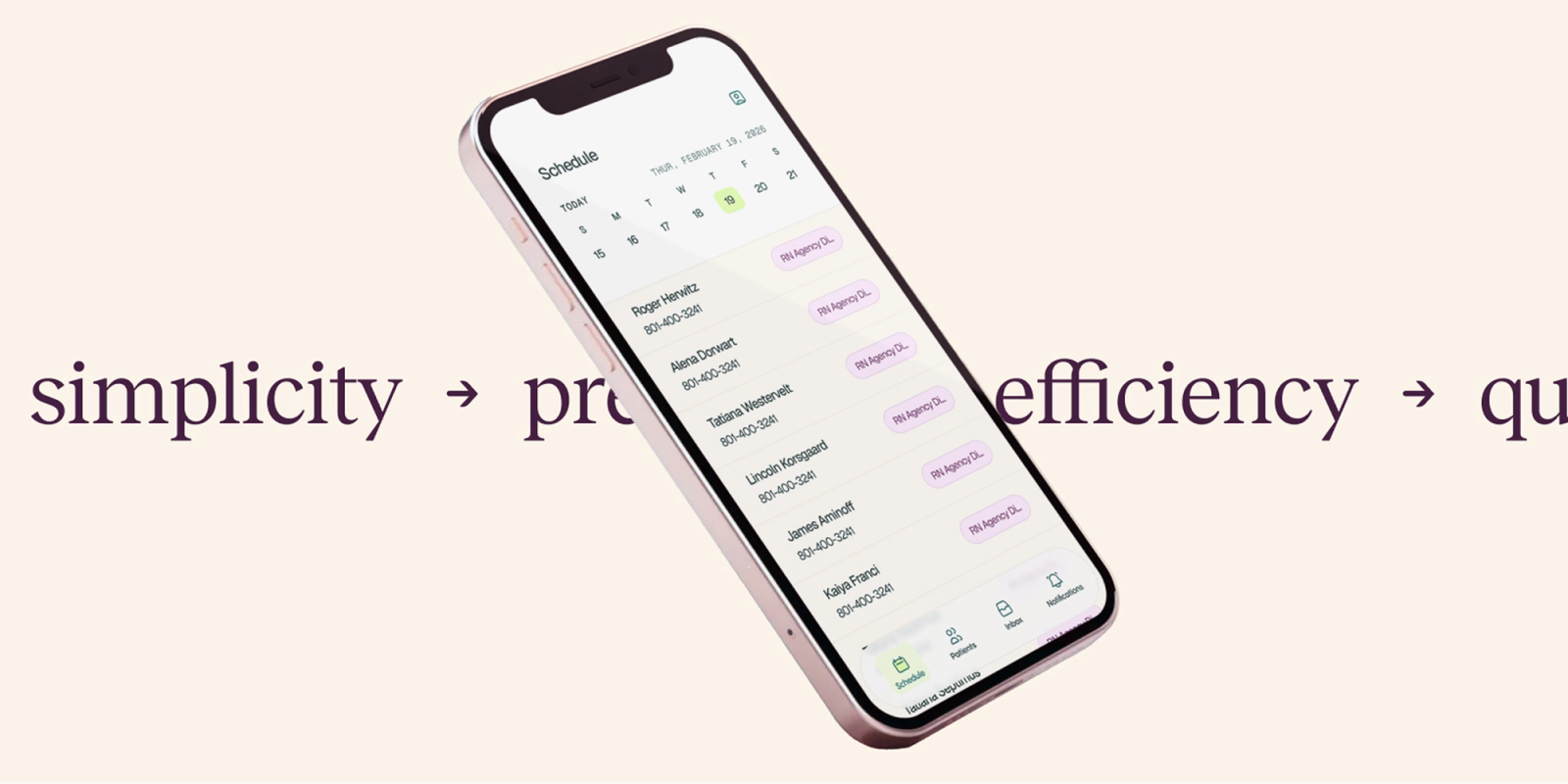
How to speed up SOC documentation: 7 proven strategies for home health agencies
How to speed up SOC documentation in home health: intake preparation, point of care charting, QA, and AI tools that finish the start of care same-day.
Author
Enzo Health Team
Enzo Health
Details
Read Time: 10 min read
Date: June 12, 2026
The start of care visit is the longest day in home health documentation. A new patient, a full OASIS-E assessment, medication reconciliation, care planning, consents, and the visit itself, and on most systems the documentation half of that work follows the clinician home. Agencies searching for how to speed up SOC documentation are usually responding to the same signal: SOC days are the days clinicians dread, and the backlog of unfinished SOC charts is where admissions, billing, and morale all slow down at once.
(One clarification for anyone who arrived sideways: SOC here means Start of Care, the home health admission visit and its documentation, not SOC 2, the security audit. If you need the cybersecurity kind, this is the wrong page in the right industry.)
This guide covers what SOC documentation includes, why it takes as long as it does, what slow SOCs cost an agency, and seven strategies that compress the work without compressing the care.
What is SOC documentation?
Understanding the start of care process
The SOC visit opens a home health episode, and its documentation carries more weight than any other visit's. It includes the comprehensive patient assessment with the full OASIS-E item set, medication reconciliation, the plan of care that physician orders will certify, consents and intake paperwork, and the visit note itself. The OASIS portion alone runs to hundreds of items, and the SOC documentation as a whole determines episode reimbursement under PDGM, seeds the quality measures, and establishes the clinical baseline every later visit gets compared against.
Why SOC documentation takes so long
Four reasons, usually stacked. The assessment is genuinely extensive; that part is irreducible. The OASIS requirements add scoring decisions a tired clinician second-guesses. Duplicate documentation makes the clinician re-enter information the agency already holds from the referral. And administrative burden (hunting missing intake information, chasing face-to-face documentation, re-collecting demographics) turns the SOC clinician into a part-time intake coordinator mid-visit.
That last one deserves emphasis, because it is the most fixable: a large share of slow SOC documentation is not assessment work at all. It is upstream work arriving late.
The hidden cost of slow SOC documentation
Clinician burnout. SOC days that end with hours of evening charting wear clinicians down fastest. "You're always on even when you're off" is how one customer described it, and SOCs are the heaviest version of that always-on.
Delayed admissions. Agencies implicitly ration SOCs when each one consumes a clinician-day. Referrals wait, and on the discharge planner's clock, waiting loses patients.
Compliance risks. The SOC chart is the episode's foundation; errors here propagate. Late SOC documentation is reconstructed documentation, and reconstruction produces exactly the gaps our documentation mistakes guide catalogs.
Reduced capacity for new patients. SOC throughput is admission throughput. An agency whose clinicians can comfortably absorb one more start per week has grown census without hiring anyone.
7 proven strategies to speed up SOC documentation
1. Standardize SOC workflows
One documentation template, one assessment order, one set of conventions. SOC variation is expensive precisely because the visit is so large: small inefficiencies repeat across hundreds of items. The standard should encode your best clinician's sequence so every clinician inherits it.
2. Complete documentation at the point of care
The SOC is the visit where after-hours reconstruction hurts most, because there is the most to reconstruct. Real-time charting during the visit, on mobile documentation built for the field, keeps the assessment attached to the observation. The honest caveat: typing hundreds of items in a patient's home divides attention, which is why point of care compliance stalls on legacy systems and why strategy seven exists.
3. Optimize OASIS assessment processes
Prepare before the doorbell: review the referral documentation, pre-populate what is already known, plan the assessment flow around the patient's condition. Data collection strategies that gather in clinical order (rather than form order) reduce backtracking, and avoiding duplicate work between the OASIS and the visit note is worth a workflow review on its own. Deeper treatment in our OASIS documentation guide.
4. Improve referral and intake data collection
The single most underrated SOC accelerator lives upstream. When intake captures complete information (diagnoses, medications, face-to-face documentation, insurance) and it flows to the clinician before the visit, the SOC starts from a half-built chart. When intake is thin, the clinician rebuilds it at the bedside. Fixing the intake workflow is fixing SOC documentation; they are one pipeline.
5. Strengthen documentation QA processes
Early error detection keeps SOC charts from bouncing. A SOC chart returned for correction a week later costs more time than it took to review, because the visit is cold. QA on every SOC before billing, with same-week feedback, converts rework into a one-pass process and keeps the episode's foundation solid.
6. Integrate documentation systems
EHR integration so the referral data, the assessment, the care plan, and the schedule share one record. Every seam between systems is a place the SOC clinician re-types something. If your intake platform and clinical documentation are separate products, the SOC is where you pay for that seam most.
7. Use AI documentation built for the SOC
The structural strategy: documentation generated from the visit itself. The clinician conducts the assessment as a conversation, and the system builds the OASIS and visit note in real time, with the chart essentially complete at the door. AI-generated documentation matters more at SOC than anywhere else because the SOC has the most to write; automated chart creation turns the longest documentation day into review and sign-off.
How AI is transforming SOC documentation
Faster chart completion. The SOC chart finishes with the visit instead of with the clinician's evening. Same-day completion becomes the default rather than the policy nobody meets.
Improved documentation accuracy. The assessment captures the bedside conversation directly. Validation runs during the visit, so the hundreds-of-items problem becomes a checked list rather than a memory test.
Reduced administrative burden. Pre-visit preparation arrives automatically when intake data flows forward; post-visit administration shrinks to review.
Better compliance outcomes. A complete, consistent, same-day SOC chart is the strongest possible foundation for the episode, the orders, and any future audit.
How Enzo Health helps speed up SOC documentation
Enzo is the first AI native EHR built for home health, and the SOC is where its connected design pays off most visibly, because the SOC is where every upstream and downstream workload meets.
Enzo Scribe. The clinician has a natural conversation with the patient and Scribe builds the documentation in real time, the full OASIS included. Charting time drops by up to 75 percent: the start of care documented in a quarter of the time, before the clinician leaves the driveway.
Enzo Intake. Intake reads the referral packet before a coordinator opens it and carries complete information forward to the visit, so the SOC clinician arrives prepared instead of investigating. Admission decisions happen in about 5 minutes instead of over an hour, and the duplicate data collection that pads SOC visits disappears because the data already lives in the record.
Enzo QA. QA reviews every chart before billing, catching missing items and inconsistencies while the visit is still warm, which recovers $200 or more per episode at a typical agency and keeps SOC charts from bouncing back as rework.
One pipeline, no handoffs. Referral to intake to scheduling (a clinician assigned in about 30 seconds) to documentation to billing, on one record. The administrative bottlenecks between teams, where SOC delays actually live, have no gaps to live in.
Running another EHR? Scribe, Intake, and QA work alongside it individually, and SOC-heavy agencies typically feel Scribe first.
Sequencing the fixes: where to start Monday
If the whole list is too much at once, sequence by payback. Week one: measure SOC documentation lag (visit end to chart signed) so improvement is provable, and standardize the SOC template. Month one: fix the intake handoff, because complete pre-visit information is the cheapest SOC acceleration available and requires no clinician behavior change. Month two: move documentation into the visit, with whatever point of care tooling your current platform supports honestly. Month three: evaluate documentation generation against a real SOC, your clinician, your patient mix, and judge it on the OASIS it produces. Agencies that sequence this way fund each step with the previous one's recovered hours.
Real-world benefits of faster SOC documentation
As deployment results from agencies running Enzo: SOC documentation completed same-day as standard practice, charting time down as much as 75 percent on the heaviest visits, clinician capacity recovered for additional starts, admissions accelerated because intake-to-SOC runs in one connected flow, and compliance posture improved because the episode's foundational chart is complete before billing ever sees it.
Common mistakes that slow SOC documentation
Delayed charting, which at SOC scale means reconstructing the longest visit of the week from memory. Poor intake processes that send clinicians in with partial information. Incomplete referral information discovered mid-visit instead of pre-visit. No documentation standards, so every SOC is improvised. And no QA review, which converts small same-week corrections into large cold-chart rework.
The scheduling connection
SOC speed and scheduling capacity are the same constraint viewed from two desks. When a SOC consumes a clinician-day plus an evening, schedulers ration starts, referrals queue, and the agency's effective admission capacity is set by its documentation burden rather than its clinical staffing. Compress SOC documentation and the scheduler suddenly has options: more starts per clinician-week, faster referral-to-admission times, and territory plans built around patient need instead of around protecting clinicians from documentation overload. Agencies working both levers at once should read this page alongside our scheduling efficiency guide; the gains compound because each one releases the other's bottleneck.
Frequently asked questions
How long should a SOC visit take?
There is no mandated duration, and acuity drives real variance. The operational question is sharper: how much documentation time does the SOC add after the visit ends? On systems where documentation is produced during the visit, the answer approaches zero; on systems where it is typed afterward, the answer is the problem this page exists for.
How can home health agencies speed up SOC documentation?
Fix the intake handoff so clinicians arrive with complete information, standardize the SOC workflow, document at the point of care, QA every SOC chart quickly, and adopt documentation that is generated from the visit. Upstream first: the cheapest SOC minutes are the ones intake stops wasting.
What causes SOC documentation delays?
The assessment's genuine size, plus three preventable additions: missing referral information collected mid-visit, duplicate entry across disconnected documents, and after-hours reconstruction. Most agencies can halve the preventable share before touching the assessment itself.
Can AI help complete SOC documentation?
Yes, and the SOC is the strongest case for it in all of home health documentation: the visit with the most items to complete benefits most from real-time generation. The evaluation bar is OASIS-native output, not visit transcription.
How can agencies reduce after-hours charting?
Move documentation into the visit (point of care or generated), prepare clinicians with complete pre-visit information, and track after-hours charting per clinician per week as a leadership metric. What leadership measures, schedules start respecting.
Final takeaways
Speed up SOC documentation by treating it as a pipeline rather than a visit: complete intake data flowing forward, a standardized assessment workflow, documentation produced at the point of care, QA before billing, and one record connecting all of it. The SOC will always be home health's biggest documentation day. It does not have to be its longest night.
From Resources
Related Articles
Loading posts...
OASIS Notes, Written For You
Enzo Scribe is built for OASIS and Start of Care documentation, generated from the visit itself.