Author

Enzo Health Team
Enzo Health
Details
Read Time: 9 min read
Date: June 12, 2026
How to reduce OASIS documentation time: 7 proven strategies for home health agencies
Learn how to reduce OASIS documentation time with workflow standardization, point of care charting, QA processes, and AI documentation that works.
Author
Enzo Health Team
Enzo Health
Details
Read Time: 9 min read
Date: June 12, 2026
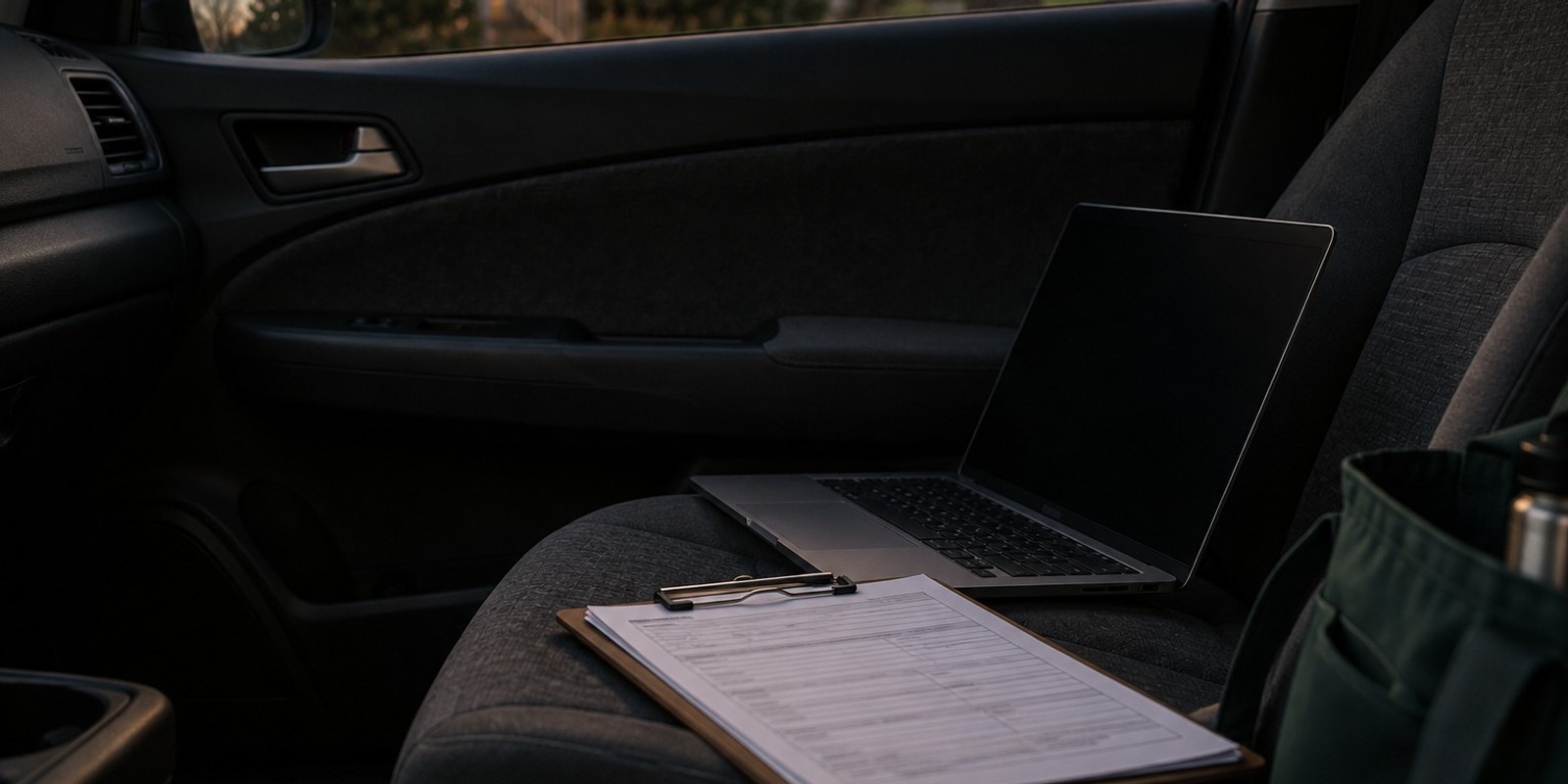
Ask a home health nurse what the hardest part of the job is and the answer is rarely the patients. It is the OASIS. The assessment runs to hundreds of items across its sections, it determines both reimbursement and compliance, and on most systems it gets finished after the visits end, at home, in the evening. "You're always on even when you're off" is how one customer described that rhythm to us, and it is the kind of rhythm that sends agencies looking for how to reduce OASIS documentation time.
This guide covers why OASIS documentation consumes so much clinician time, what that costs an agency beyond the hours, and seven strategies that actually move the number, ranked roughly from easiest to most structural. The seventh moves it most: agencies running on Enzo Scribe cut charting time by up to 75 percent, with the OASIS finished before the clinician leaves the driveway.
What is OASIS documentation?
The Outcome and Assessment Information Set (OASIS) is the standardized patient assessment CMS requires from Medicare-certified home health agencies at specific points in care: start of care, recertification, resumption of care, transfer, and discharge. The current version, OASIS-E, expanded the item set again, and the data feeds three things at once: reimbursement under PDGM, quality measures and star ratings, and survey compliance.
That triple role is why OASIS documentation cannot be rushed carelessly. An inaccurate assessment is not just rework; it is a mis-scored episode, a quality measure that misses, or an audit finding. The goal is not less documentation. It is the same accuracy in less clinician time.
Why OASIS documentation takes so long
Manual data entry
Most OASIS documentation is still typed, item by item, into an EHR form. Information the agency already holds (referral data, medication lists, prior assessments) gets re-keyed instead of carried forward, and the clinician becomes the integration layer between documents.
Duplicate documentation
OASIS items overlap heavily with the visit note, the care plan, and the medication profile. On systems that do not connect those documents, clinicians answer the same question several times in different formats. Reviewers of the major legacy platforms name duplicated entry as one of their most consistent complaints, and every duplicated field is minutes multiplied across every start of care.
Incomplete workflows
When intake gathers thin referral information, the SOC clinician inherits the gap: hunting for diagnosis codes, calling for face-to-face documentation, reconstructing the history the hospital already wrote down. OASIS time problems often start upstream of the OASIS. Our guide to intake workflows covers that side of the problem.
Compliance requirements
OASIS-E exists to satisfy Medicare compliance, and the items cannot be skipped. Each regulatory update adds review time as clinicians relearn conventions, and fear of audit findings pushes many toward over-documentation: writing more than required everywhere, because nobody is sure exactly where the line is.
Clinician burnout and administrative burden
The cycle compounds. Documentation pushed to the evening gets done tired, tired documentation has more errors, errors come back from QA as rework, and rework adds more after-hours time. Agencies the size of a single team feel it as turnover risk; the operators we talk to describe it as always playing catch-up even on the basics.
One scoping note before the strategies: OASIS documentation is not only the start of care. Recertification, resumption of care, transfer, and discharge each carry their own assessment requirements, and the time problem compounds across all of them. Every strategy below applies at every timepoint, but measure them separately, because an agency that has fixed SOC documentation and still bleeds hours at recertification has done half the job and may not know it.
7 proven strategies to reduce OASIS documentation time
1. Standardize documentation workflows
Variation is time. When every clinician documents in a different order with different conventions, QA reviews take longer, training takes longer, and nobody benefits from anyone else's shortcuts. Agency-wide templates, a defined item order, and one set of documentation conventions remove decisions from the process. The test of a good standard: a new hire can produce a chart QA cannot distinguish from a veteran's within their first month.
2. Improve OASIS training
OASIS scoring is a skill, and uncertainty is slow. Clinicians who second-guess M-item conventions stop mid-assessment, look things up, and revise after QA feedback. Ongoing education (not just onboarding), coding accuracy reviews with feedback loops, and quick-reference documentation standards turn hesitation into speed. The cheapest minutes you will ever buy back are the ones a clinician currently spends wondering whether they answered M1800 correctly.
3. Use clinical documentation tools
Purpose-built clinical documentation tools (templates, smart defaults, validation that runs while charting rather than after) reduce both errors and time. The distinction that matters when evaluating them: tools that check the documentation help; tools that produce the documentation change the workload. Most of the market sells the first kind and markets it as the second.
4. Integrate your EHR systems
Every disconnected system adds re-entry. When referral documents, medication data, and prior assessments flow into the OASIS workflow automatically (true electronic health records integration rather than a PDF attached to a chart), the clinician starts from a half-built assessment instead of a blank one. If your current platform cannot carry intake data forward into the SOC, that single gap may be the largest OASIS time cost in your agency.
5. Document at the point of care
After-hours charting is slower charting: details fade, context is gone, and the work competes with the rest of life. Point of care documentation (mobile charting completed during or immediately after the visit) keeps the assessment connected to what the clinician just observed. The honest obstacle is that typing hundreds of items in a patient's living room is awkward, which is why point of care adoption stalls on legacy systems and why ambient documentation (strategy 7) changes the math.
6. Establish QA and review processes
A strong quality assurance process reduces total OASIS time even though it adds a review step, because it catches errors once instead of letting them reach billing, denials, and rework. The mechanics: every chart reviewed against a consistent standard, feedback routed to the clinician quickly enough to change behavior, and audit-readiness as a by-product rather than a fire drill. Our breakdown of common documentation mistakes covers what QA should catch.
7. Use AI documentation that produces the OASIS, not just checks it (Enzo Scribe)
Every strategy above optimizes how clinicians produce documentation. The structural change is the system producing it. AI documentation built for home health listens to the actual visit conversation and builds the OASIS in real time: the clinician assesses the patient, the assessment forms as they talk, and the after-visit work becomes review and sign-off rather than data entry.
The distinction to press any vendor on: a tool that summarizes a recording into a narrative note still leaves the OASIS items to you. Documentation built natively around OASIS-E populates the assessment itself.
How AI is changing OASIS documentation
Faster chart completion. When documentation forms during the conversation, the gap between visit end and chart completion collapses from hours (or days) to minutes.
Improved documentation accuracy. The assessment captures what was actually said and observed at the bedside, not what a tired clinician reconstructs at 9 PM. Validation runs while the chart is built, so inconsistencies surface before sign-off.
Reduced clinician burnout. The evening charting block is the most resented hour in home health. Removing most of it is a retention lever, not just a productivity one.
Better compliance outcomes. Consistent, complete, same-day documentation is what surveyors and auditors want to see. Speed and compliance stop trading off when the documentation is produced rather than typed.
How Enzo reduces OASIS documentation time
Enzo is the first AI native EHR built for home health, and OASIS documentation is one of the workloads it was built to remove rather than record.
Enzo Scribe. The clinician has a natural conversation with the patient and Scribe builds the OASIS in real time, during the visit. Across agencies running on Enzo, charting time drops by up to 75 percent: documentation done in a quarter of the time, before the clinician leaves the driveway.
Enzo QA. QA reviews every chart before billing, flagging missing items, inconsistencies, and coding issues while they are still cheap to fix. For a typical agency that recovers $200 or more per episode that documentation errors were leaving behind.
One connected record. Because Enzo carries the episode from referral to reimbursement, intake data flows into the SOC instead of being re-keyed, and the assessment feeds scheduling, care planning, and billing without duplicate entry. The strategies above stop being seven separate projects; they are how the system works.
Not ready to replace your EHR? Scribe and QA run individually alongside the platform you have today.
Real-world results
The numbers agencies on Enzo see, stated plainly: documentation time down as much as 75 percent per visit, OASIS and visit notes completed before the driveway instead of after dinner, QA review on every chart with $200+ per episode recovered, and intake-to-admission decisions in about 5 minutes instead of over an hour. Those are deployment figures from agencies running Enzo today, not projections.
Common mistakes that slow OASIS documentation
Delayed charting (the single biggest time multiplier, because reconstruction is slower than observation). Thin intake handoffs that make the SOC clinician do intake's research. Training that ends at onboarding while OASIS conventions keep changing. Inconsistent workflows that make every QA review a translation exercise. And treating documentation tools as a checkbox purchase rather than asking the only question that matters: after this tool, who produces the documentation, my clinician or the system?
Frequently asked questions
Final takeaways
Reducing OASIS documentation time is a sequence, not a single purchase: standardize workflows, train continuously, fix the intake handoff, document at the point of care, review everything in QA, and then make the structural move to documentation that is produced rather than typed. The goal, stated plainly: clinicians give report on the patient, not on the paperwork.
See what OASIS documentation looks like when the system builds it during the visit. Book a walkthrough.
Email me updates like this
Get more helpful content like this from Enzo straight into your inbox
From Resources
Related Articles
Loading posts...
OASIS Notes, Written For You
Enzo Scribe generates OASIS-ready notes from the visit and flags gaps before review.