Who qualifies for home health?
The short answer
Whether a patient qualifies isn't your call: a doctor or other practitioner certifies it. Medicare looks for a patient who is homebound, under a practitioner's care, needs intermittent skilled nursing, physical therapy or speech-language pathology, and has a plan of care, with an agency that takes part in Medicare. Your notes can support the certification when the practitioner signs them and the rest of the record agrees. The patient doesn't have to get better to qualify.
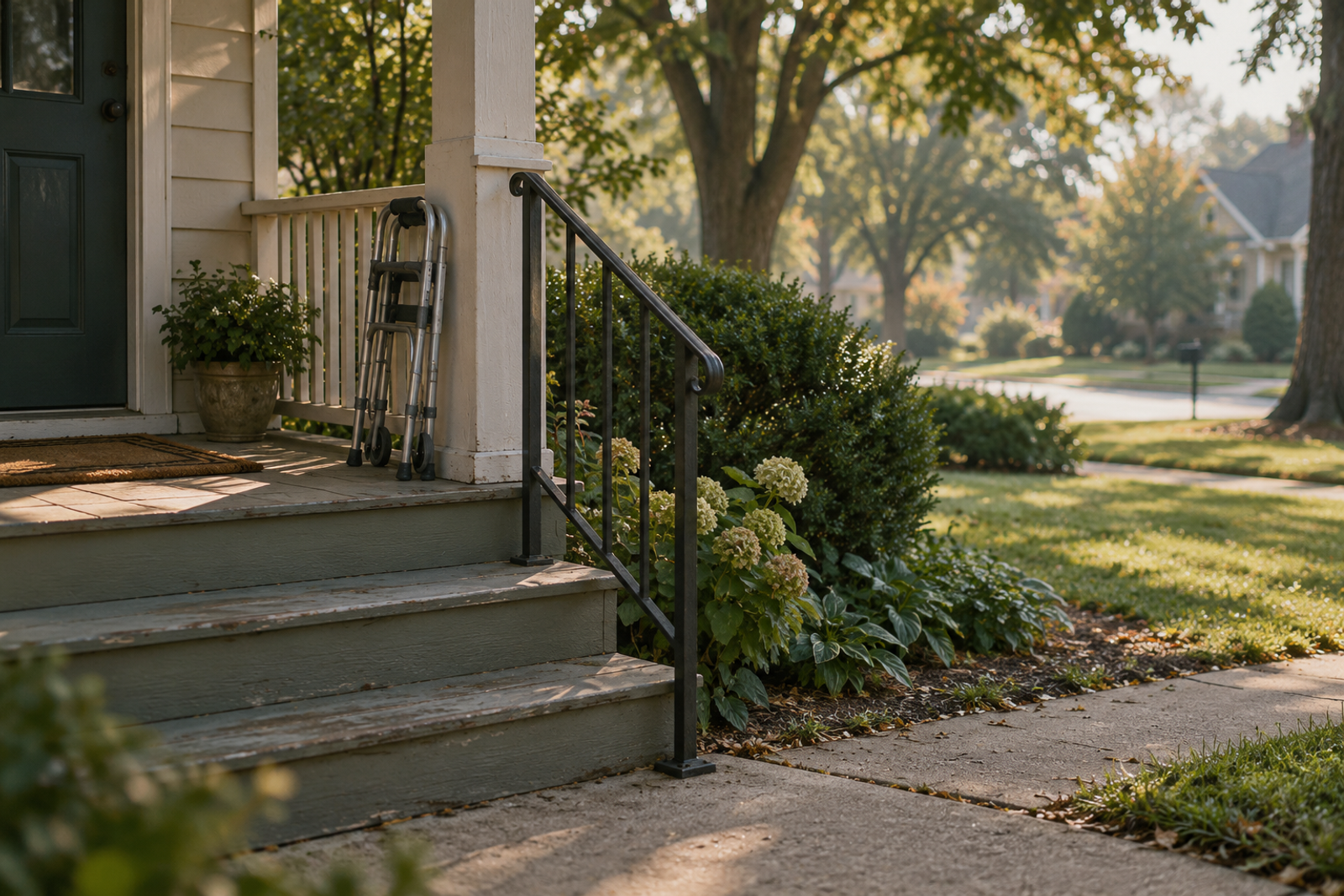
Whether a patient qualifies for home health isn't your call. A doctor or other practitioner certifies it. But what you write can back that certification up, so it helps to know what Medicare is looking for.
What Medicare looks for
Medicare pays when the patient is stuck at home, is under a doctor's or other practitioner's care, and needs skilled nursing, physical therapy or speech-language pathology in visits, not around the clock. There's a plan of care, and the agency is one that takes part in Medicare.
| Medicare's test | In plain words |
|---|---|
| 1. Confined to the home | Stuck at home |
| 2. Under the care of a physician or allowed practitioner | Under a doctor's or other practitioner's care |
| 3. Needs intermittent skilled nursing, physical therapy or speech-language pathology | Needs skilled nursing, physical therapy or speech-language pathology in visits, not around the clock |
| 4. Has a plan of care | There's a plan of care |
| 5. Served by an agency that participates in Medicare | The agency is one that takes part in Medicare |
If you're an occupational therapist, your visits can't open the benefit on their own. They can keep it going once nursing, PT or speech-language pathology has qualified the patient.
Fine print
The federal rule sets five conditions. The patient: 1. is confined to the home; 2. is under the care of a physician or allowed practitioner; 3. needs intermittent skilled nursing, physical therapy or speech-language pathology; 4. has a plan of care; 5. is served by an agency that participates in Medicare. Nursing must also be intermittent, in general: fewer than seven days a week, or daily for less than eight hours a day for 21 days or less, with limited exceptions. The manual says that in most instances the definition is met when the patient needs a skilled nursing service at least once every 60 days.
What "homebound" means
Homebound doesn't mean your patient never leaves the house. It means getting out is hard. Because of an illness or injury, they need a device, special transportation or another person to get out, or leaving home is medically contraindicated for them. And they normally can't leave, and going out takes a considerable, taxing effort. Both have to be true.
They can still go to medical appointments, religious services, adult day care and the occasional short outing. A patient whose psychiatric illness shows up partly as refusing to leave home can be homebound with no physical limitation. Being older and frail isn't enough on its own.
Fine print
The manual's first criterion is that the patient needs "supportive devices such as crutches, canes, wheelchairs, and walkers; the use of special transportation; or the assistance of another person" to leave home, or has "a condition such that leaving his or her home is medically contraindicated." The second is "There must exist a normal inability to leave home; AND Leaving home must require a considerable and taxing effort." The adult day care program has to be state-licensed, certified or accredited. For occasional short outings, the manual's test is that they are infrequent or short and "do not indicate that the patient has the capacity to obtain the health care provided outside rather than in the home." The two examples are a psychiatric illness "manifested in part by a refusal to leave home" and "frailty and insecurity brought on by advanced age."
What makes care skilled
Skilled care is care complex enough that only a professional, or someone they supervise, can do it safely and effectively. A nurse doing a task doesn't make it skilled, and the diagnosis alone never settles it.
For nurses, skilled work isn't only hands-on procedures. Keeping an eye on a patient whose condition could reasonably change counts, when it takes a nurse to judge that change. Teaching counts. And when only a registered nurse can make sure the patient's everyday care is actually working, managing that plan counts too. With teaching, what counts is the skill it takes to teach, not the subject.
For therapists, the question is whether the care needs a skilled therapist to do it or supervise it. A qualified therapist reassesses the patient at least every 30 days.
Fine print
The manual's wording is "so inherently complex that it can be safely and effectively performed only by, or under the supervision of, professional or technical personnel," and "a service is not considered a skilled nursing service merely because it is performed by or under the supervision of a nurse." A diagnosis "should never be the sole factor in deciding that a service the patient needs is either skilled or not skilled." The nursing categories are "a reasonable potential for change in a patient's condition," "only a registered nurse can ensure that essential unskilled care is achieving its purpose," and "The test of whether a nursing service is skilled relates to the skill required to teach and not to the nature of what is being taught." For therapists: "only by or under the general supervision of a skilled therapist."
Your patient doesn't have to get better
A patient who won't improve can still qualify. What matters is whether they need skilled care, and that care can be there to improve their condition, to keep it steady, or to slow a decline.
Fine print
The manual says, "Coverage does not turn on the presence or absence of an individual's potential for improvement, but rather on the beneficiary's need for skilled care." CMS restated this policy after a court settlement approved in 2013. Its fact sheet says the settlement did not change the eligibility requirements. The manual's words for the last purpose are "to prevent or slow further deterioration."
The face-to-face visit
Before Medicare pays, a practitioner has to have seen the patient about the reason they need home health, sometime in the 90 days before care starts or the 30 days after. It may be by telehealth, within Medicare's telehealth rules. Whoever certifies the patient writes that visit's date on the certification. If you're not sure your agency accepts a telehealth visit for this, ask.
| The face-to-face visit | The rule |
|---|---|
| How early | Up to 90 days before care starts |
| How late | Within 30 days after care starts |
| What it is about | The reason the patient needs home health |
| How | It may be by telehealth, within Medicare's telehealth rules |
| Who records the date | Whoever certifies the patient writes the visit's date on the certification |
Fine print
The visit must be "related to the primary reason the patient requires home health services" and must have happened "no more than 90 days prior to the home health start of care date or within 30 days of the start of the home health care." Who can perform the visit changed on January 1, 2026. The rule now lists a physician, a nurse practitioner, a clinical nurse specialist, a physician assistant, or a certified nurse-midwife as state law allows. CMS removed the older limit that tied the visit to the certifying practitioner or to a practitioner at the facility the patient was leaving. Medicare's Benefit Policy Manual, chapter 7, section 30.5.1.1, still describes the old rule. The rule says the visit "may occur through telehealth," within Medicare's telehealth law. In the same rule, CMS said these visits can be performed at an approved originating site, as its manual describes. Medicare's general telehealth allowances currently run through December 31, 2027. Since March 2020, the certifier can be a physician, a nurse practitioner, a clinical nurse specialist or a physician assistant. CMS's telehealth FAQ does not mention this visit.
What it costs your patient
Your patient pays nothing for covered home health services, and they don't need a hospital stay first. Medical equipment is different: after the Part B deductible, they pay 20% of the Medicare-approved amount.
Fine print
Medicare.gov says, "You pay nothing for covered home health services." The commission that advises Congress on Medicare writes, "In contrast to coverage for skilled nursing facility (SNF) services, Medicare does not require a preceding hospital stay to qualify for home health care."
When it isn't traditional Medicare
If your patient has a Medicare Advantage plan, the plan has to cover the same benefit. Most enrollees, though, are in plans that need prior authorization for home health, and a plan may send your patient to agencies it contracts with. Medicaid can't limit home health to people who are homebound. And in six states, traditional Medicare claims get an extra review.
Fine print
In 2026, 55% of eligible beneficiaries are in Medicare Advantage plans. By KFF's count, which leaves out employer group and special needs plans, about 90% of enrollees are in plans that require prior authorization for home health services. The Medicaid rule says home health services "cannot be limited to services furnished to beneficiaries who are homebound." The extra review is a CMS demonstration in six states, Illinois, Ohio, Texas, North Carolina, Florida and Oklahoma, that reviews home health claims against existing Medicare policy, before or after payment. Everything else in this chapter describes traditional Medicare.
What your notes do
You don't certify, but your notes can carry weight. Your assessment can help, as long as the practitioner's own records, or the discharging facility's, back it up and the practitioner signs off on it. If the record doesn't hold up, Medicare doesn't pay for the care.
Medicare expects visit notes to tell the story of what the patient has achieved toward their goals. Notes like "Patient tolerated treatment well," "Caregiver instructed in medication management" or "Continue with POC" don't show skilled care. For homebound status, "taxing effort to leave the home" on its own isn't enough. It usually takes information about the patient's health over time.
Fine print
The rule's wording is that "payment is not rendered for home health services provided." The agency's documentation, including the assessment, can support the certification on two conditions: other entries in the practitioner's record, or in the discharging facility's record, must back it up, and the practitioner must sign and date it to show it was considered. The manual describes what it expects of visit notes as the story of the patient's achievement toward his or her goals, and gives the three entries above as examples that do not show skilled care. It says the stock phrase is not sufficient by itself and that information about the patient's health over time is typically needed.