What is home health, and what changes when you move into it?
The short answer
Home health is skilled nursing and therapy given in the patient's home, in visits, on the order of a doctor, nurse practitioner, clinical nurse specialist or physician assistant. It's different from home care and from hospice. Medicare pays when the patient is homebound and needs skilled care in visits. Coming from a hospital, clinic or facility, you'll drive to each patient with an agency office behind you. The start of care assessment includes OASIS, which helps set the agency's Medicare payment and its public quality scores.
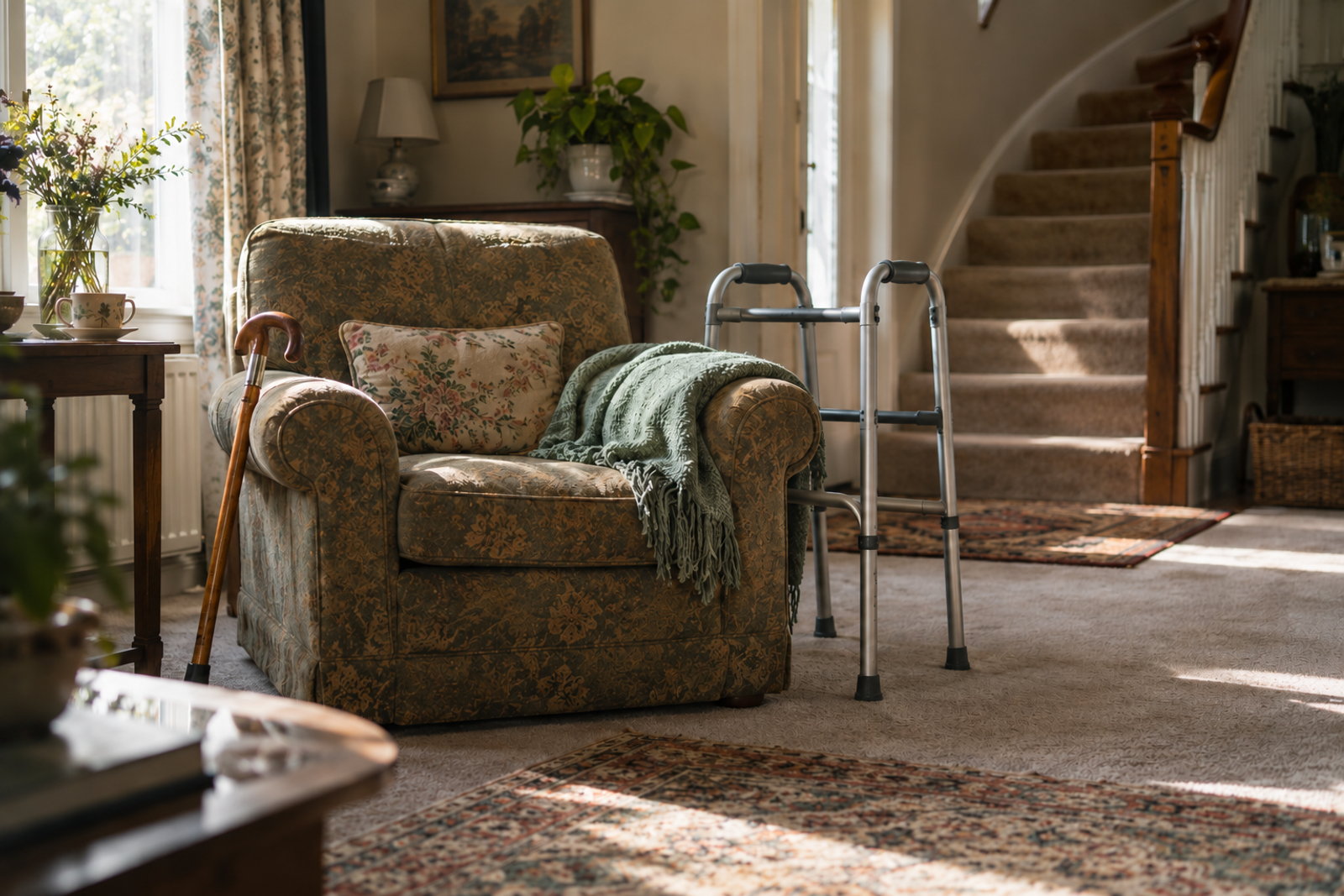
What's new in home health is who qualifies, who orders the care, what you write down, and the fact that you do all of it in someone's living room.
What home health is
Home health is medical care that comes to the patient. You visit, do skilled work, teach the patient and whoever helps them, and leave. Medicare covers visits from nurses, therapists, medical social workers and home health aides, though an aide only comes alongside skilled care.
Nobody lands on your caseload without an order. A doctor, nurse practitioner, clinical nurse specialist or physician assistant orders the care and signs the plan of care, and the agency has to be certified by Medicare.
The rules in this chapter are traditional Medicare's.
Fine print
Medicare covers six kinds of visit at home: skilled nursing, physical therapy, occupational therapy, speech-language pathology, medical social services and home health aide care. Until March 2020, the person who ordered the care had to be a physician. On traditional Medicare in 2024, a patient got about eight in-person visits in a 30-day period on average. In a full period, that was roughly four from nurses and four from therapists. More than 12,000 Medicare-certified agencies cared for about 2.7 million people on traditional Medicare in 2024. The rules and numbers in this chapter are traditional Medicare's; Medicare Advantage plans, Medicaid and private insurers add their own.
Home care and hospice are different things
Two other services happen in the home, and people mix them up with home health. Home care is help with daily life: bathing, dressing, meals, housekeeping. Hospice is comfort care for a person near the end of life. The patient chooses comfort over treatment aimed at a cure, and it's a separate Medicare benefit with its own rules.
If a job posting says "home care," ask which one it means.
Fine print
Hospice is for a person whose doctor expects them to live six months or less if the illness runs its normal course. Medicare does not pay for meal delivery or for housekeeping unrelated to the care plan. It does not pay for help with bathing and dressing when that is the only care a person needs, and it does not pay for round-the-clock care at home.
Is the patient homebound?
The office handles some of what Medicare requires. Whether the patient is homebound and whether they need skilled care in visits land on you, and you'll document both for as long as you work in home health.
A homebound patient needs help to get out of the house, or shouldn't go out because of their condition. They normally can't leave, and going out takes a lot of effort.
Homebound patients still go out. Medical appointments, dialysis, state-licensed adult day care and religious services are allowed, and so are occasional outings that are infrequent or short, like a trip to the barber or a funeral.
Your note needs more than a stock phrase like "taxing effort." The record usually needs to show the patient's condition over time, so describe what you saw.
Fine print
The requirements that belong to the office are the order, the plan of care and the agency's certification. The two that land on you are that the patient is homebound and that the patient needs skilled care in visits. Medicare's homebound test has two parts. The first is that the patient needs the help of supportive devices such as a cane, a walker or a wheelchair, special transportation, or another person to leave home, or that leaving home is not recommended because of their condition. The second is a normal inability to leave home, where leaving home "must require a considerable and taxing effort." Medicare's own examples of allowed outings are a trip to the barber, a walk around the block, a family reunion, a funeral and a graduation. Medicare says wording like "taxing effort" is not sufficient by itself.
Does the patient need skilled care in visits?
You come and go in visits. Nursing can't run all day, every day, for long. Therapy works differently. A need for physical therapy or speech-language pathology can qualify a patient by itself. Occupational therapy can't start the benefit alone, but it can keep it going once nursing, PT or speech has qualified the patient.
Fine print
Medicare's word for care in visits is intermittent. For nursing, intermittent means care on fewer than seven days a week, or daily care for less than eight hours a day over 21 days or less, with a few exceptions.
You work alone, in the patient's house
Wherever you worked before, the patient came to you. Now you go to them, and nobody's down the hall. You work alone with an office behind you, and the physician relies more heavily on the nurse to assess the patient and report back.
It's the patient's house, so patients often have more say than they would in a hospital over whether and how a plan happens. Family members who help with care aren't under your authority. So you work through teaching, persuading and checking back.
Fine print
These points come from AHRQ's handbook for nurses. It describes home health nurses as people who "work alone in the field with support resources available from a central office," says the physician relies more heavily on the nurse to assess the patient and report back, and calls the home "the inviolable domain of the patient."
Your day is a route, and your bag is your supply room
You drive between homes and plan the day around the map. What you need is in your bag and your car, and you treat with what the home has: their stairs, their bathroom, their furniture. If you're a therapist, that's your gym now. You'll also meet hazards you can't fix on the spot. Before your first visit alone, ask what your agency's safety policy says.

Fine print
OSHA lists the road itself among the hazards of the job, next to hostile animals and violence, and NIOSH adds needlesticks and overexertion. North Carolina's statewide infection-control program teaches home health staff to keep the bag off the floor, set it on a visibly clean, dry surface, and keep clean and dirty items apart in the car. AHRQ's example of a hazard you can't fix on the spot is the height of the stair risers, which a hospital has engineers to keep safe.
Who's working around you
You may be the only clinician in the house, but the agency is built around your visits. It has an administrator who runs it day to day, and clinical management that oversees patient care. A clinical manager has to be available whenever the agency is open. Find out who yours is on day one.
In many agencies, intake takes the referral, scheduling builds your visit calendar, QA checks your charts before they're final, and coding and billing turn your documentation into a claim.
Fine print
Federal rules require an administrator who runs the agency day to day, and clinical management that oversees patient care. That means assigning patients and staff, coordinating care and referrals, and making sure each plan of care is developed, carried out and updated. Titles for the office jobs vary, and no federal rule names them. Intake also gathers the paperwork and checks the insurance. Scheduling also matches patients to clinicians. QA reads charts and assessments for accuracy. Coding and billing turn the diagnoses and your documentation into a claim.
Who does the start of care assessment, and how fast
Every patient gets a full assessment at the start of care, and part of it is a federal data set called OASIS. A registered nurse usually completes it. When therapy is the only service ordered, a physical therapist or speech-language pathologist can. Licensed practical nurses, therapy assistants, social workers and aides can't.
The first visit, called the initial assessment visit, has to happen within 48 hours of the referral or of the patient coming home, or on the start date the doctor ordered. The full assessment is due within five calendar days of the start of care.
Fine print
For Medicare patients, an occupational therapist can complete the assessment only when OT is ordered together with PT or speech-language pathology.
Why the start of care assessment matters so much
How you score a patient on OASIS affects what Medicare pays the agency for a 30-day period. The same data goes into quality reports for agencies and public reports on the Care Compare website.
Many agencies have a reviewer read the assessment before it's final, so expect questions back.
Fine print
Your answers on items such as how well the patient grooms, dresses, bathes, transfers and walks place them at a low, medium or high level of functional impairment, and that level is one of five things that set what Medicare pays the agency for a 30-day period. CMS's wording is that OASIS data are used for "production of quality reports for agencies, public reports on the Care Compare website, and to determine payment."
What to ask in your first week
Every agency teaches this job its own way, so get these answered early:
- Who's my clinical manager, and how do I reach them from a patient's home?
- Who reviews my start of care assessments, and how fast do they come back?
- What does our safety policy say about pets, unsafe homes and visits after dark?
- What goes in my bag, and where do supplies come from?
Ask what a homebound note that holds up looks like here, too.
Fine print
One employer, CenterWell Home Health, describes an orientation of around six to ten weeks beside a peer mentor, covering Medicare basics, time and visit management, care coordination and the charting system. Yours may be shorter.