Author

Zach, CEO
Enzo Health
Details
Read Time: 5 min read
Date: June 11, 2026
AI won’t save your legacy EHR.
For fifty years, software has been a tool. With AI, it can be a worker. Why bolting AI features onto a legacy EHR is a dead end, and what we rebuilt instead.
Author
Zach, CEO
Enzo Health
Details
Read Time: 5 min read
Date: June 11, 2026
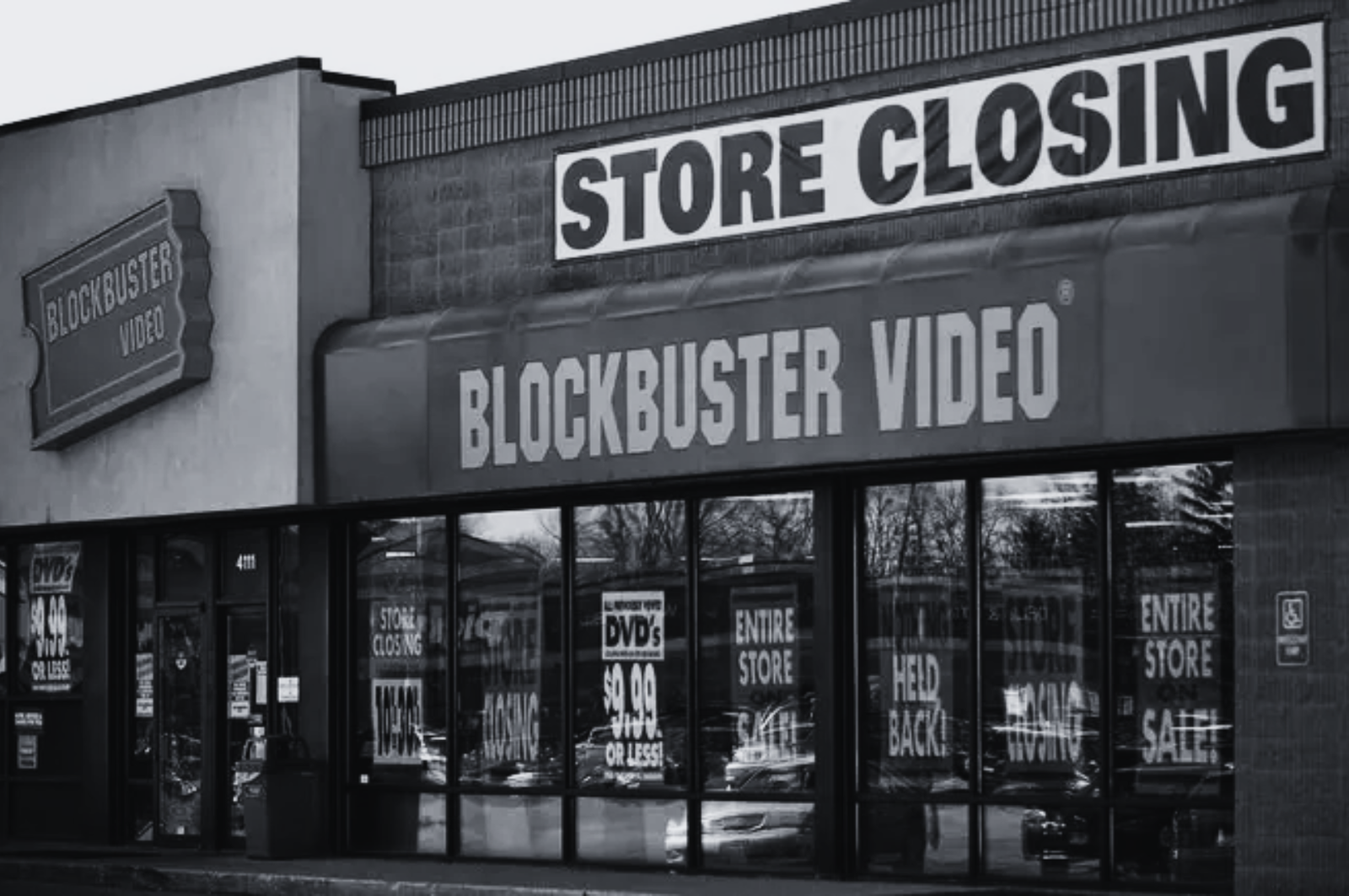
In 1985, the photo development store, the video rental chain, and the independent bookstore were fixtures of every American main street. By 2010, most of them were out of business.
In each case, the owners adopted new technology in the same way: adding the new thing to the old foundation. A digital camera that still made you mail in prints. A DVD subscription service that came in the mail. An online listing for a bookstore that kept the same physical floorplan.
None of them survived. The ones that rebuilt did.
Home health software is at the same crossroads.
When agencies first replaced paper records with digital ones, the EHR had a clear job: act as a single filing cabinet for what happened. A system of record. It was a real leap, and it solved a real problem.
But as technology made it easy to record what happened, EHRs started creating more problems than they solved. Agencies stopped suffering from a lack of data and started suffering from too much. And in traditional EHRs, that data requires people to move it.
The clinician spending their nights charting at home. The clinical manager taking on more work than one person can handle. The biller chasing a denial that traveled through five handoffs. The QA team scrubbing notes that should not have needed scrubbing. The patchwork of five, six, seven tools that agencies stitch together to fill all the holes.
Your legacy EHR is now the biggest burden in your agency.
That’s not your fault. For fifty years, software has been a tool. Something humans use to do their work. You type, things appear. You click, things move forward.
But that structure is over.
With AI, software can be a worker. Coding tools write their own code. Prospecting tools find their own leads. That shift is happening in every industry in the world, including home health. And it’s time for agencies to decide how they will respond.
Legacy EHR vendors will claim they are adopting AI. Adding assistants, rolling out new features, introducing new point solutions. They will point to faster tasks as proof. And in the short term, that may be true.
But that approach is a dead end. Decades of incremental updates, slowly stacking things on top of each other, results in a patchwork. And patchwork has a cost.
Everyone working inside legacy software knows the feeling: it wasn’t built for how the work actually happens.
When it comes to AI, the truth is plain. Legacy EHRs are simply adding the new thing to their old foundation.
At Enzo, we decided to rebuild.
We didn’t add AI to an existing system. We built an EHR where AI is the system. Not as a feature. From the ground up.
It runs on a simple assumption: your software should do all the work it can on its own (and that’s a lot). Your team should only need to step in on things that need their review or judgment.
That means referral-to-admit decisions happen in minutes. Sixty days of scheduling are generated instantly. The OASIS builds itself in real time during visits. Charts are automatically reviewed before reaching a biller. All without any handoffs, data re-entry, or separate tools bridging the gaps, because the gaps don’t exist.
This is not a roadmap. It’s what Enzo EHR does from day one.
A new way to run home health exists now. The question is what you will do about it.
One option feels easy, and even logical: add the new AI features your EHR offers, and leave everything else the same.
But over time, you’ll start to see a shift. Your best clinicians start leaving for agencies where they don’t have to do any after-hours charting. Your referral sources start sending volume to the agency that confirms intake in two hours instead of two days. A hospital you’ve held for fifteen years will go with someone else and explain it as “operational fit.” Your competitors’ cost per patient will plummet while yours stays the same. The bids you used to win, you start losing. The contracts you used to renew, your competitor signs.
It won’t happen all at once. But by the time it’s obvious, it will be too late. You will have run out of moves.
There’s another option: rebuild. Move to a new kind of EHR. One built on the technology of the future. One where the work moves itself, running quietly in the background until you need to weigh in.
That path feels scarier, heavier. But time only moves in one direction. For agencies who don’t want to fall behind, it is the only path.
The time is now.
If you’ve been sensing that something is wrong with your software, that your team is working harder and your system is doing less than it should, you are right. The era you have been operating in is ending. A different one is here.
The decision you make in the next twelve months is the decision that determines the future of your agency.
Come do it with us.
Zach Newman, Co-founder and CEO, Enzo Health
Email me updates like this
Get more helpful content like this from Enzo straight into your inbox
From The Blog
Related Articles
Loading posts...

See what Enzo can do for your agency
Discover what's possible when your software stops holding you back.